A check of the record that does not depend on us. Being built.
Footage: NASA/JPL-Caltech
Why
If only the vendor can check the record, it is a statement, not a proof.
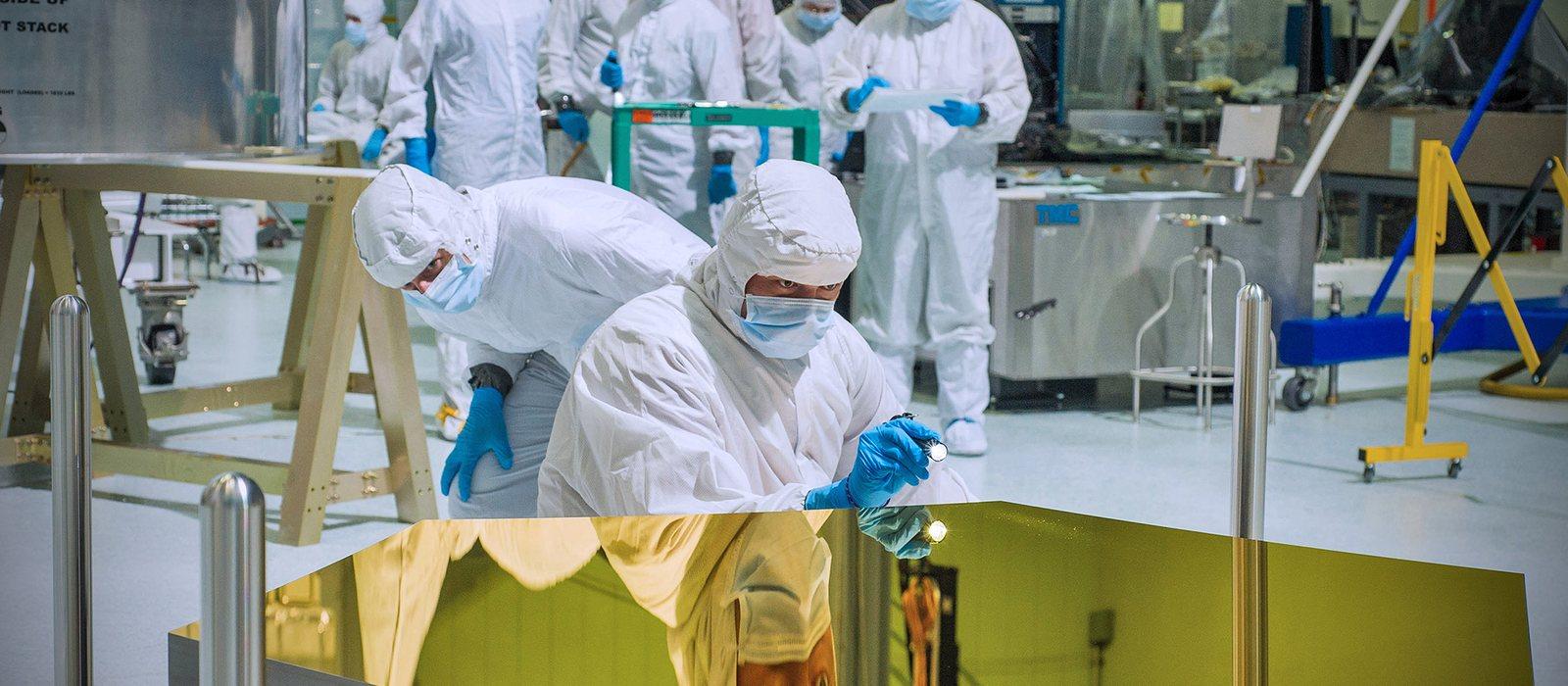
A part is inspected by someone who did not build it. The same should hold for a compliance result. A customer, an auditor or an authority should be able to check a record without asking us and without access to our systems.
That is what the verifier is for: a separate program, to be published with its source, that takes a record and says whether it holds. We are part of the way there, and this page says how far.
Three levels of checking
From the signature to the result itself.
- 01
The signature
Was this attestation issued by Caelex, and is it unchanged? This can be checked offline today.
- 02
The record
Do the fingerprints of rule set, facts and result fit together, and is the record in the log? Being built.
- 03
The result
Run the same rules on the same facts and arrive at the same result. Planned after that.
Where it stands
- /0.1
Signed attestations.
An attestation carries a signature that can be verified offline. The check relies on our evaluation of the facts; it is not a mathematical proof of the result.
Today
- /0.2
A log of what was issued.
Issued records are to be entered in an append-only log. Independent witnesses for that log do not exist yet; witnesses we run ourselves would only mirror us.
Being built
- /0.3
One open program.
A single verifier with published source and a guide for third parties, so that the check can be run on a machine that has no connection to us.
Being built, not public yet
- /0.4
Recomputing a result.
Taking the rule set and the facts a record names and computing the result again, outside our systems.
Planned
The verifier is not available to the public today. A verified record shows that the record is intact and who issued it. It is not legal advice, not an approval by an authority and not an export authorisation.