
Products / Space missions
Mission and regulatory modelling
CaelexforSpace
Model the mission. See which obligations follow from it in the covered countries, each with its official source.
Live
A mission goes in. Its obligations come out.
The studio, playing the example of an Austrian operator with two small spacecraft in low Earth orbit.
Mission
Obligations · Weltraumgesetz, Austria
Computed, no language modelTwo modelsStep 1
First the mission, as a model.
Seat, activity, spacecraft, orbit, launch, payload. Typed in, or read from the orbit your tracking data describes.
- Seat
- Austria
- Orbit
- LEO · 550 km · 97.5°
- Spacecraft
- 2 × 120 kg, propulsion
Weltraumgesetz · Austria
- Authorisation of the space activity§ 3
- Meet the conditions for authorisation§ 4 (1)
- Liability insurance without limit on run-off cover§ 4 (4)
- Minimum insured sum per insured event§ 4 (4)
- Precautions against space debris§ 5
- Transmit register information after launch§ 10 (2)
Demo data
The drawing shows the principle with demo data. Not legal advice. Whether something is authorised is decided by the authority.
Four answers
Every rule gets one of four answers. None of them is a score.
The states are told apart by their shape. There is no traffic light, no percentage and no overall grade, because a duty is not a fraction.
applies
The conditions of the rule are met by your mission.
does not apply
They are not met. The row stays, with the reason.
unknown
A fact is missing. It is named, and never read as a no.
contested
The wording leaves something open. The reason is shown; the product does not decide.
See it work
From the mission to its obligations, and back.
Step 1 of 5
Describe the mission, or read it from its orbit.
- Seat, activity, spacecraft, orbit, launch, payload
- An orbit from two-line elements, an orbit message or a state vector
- Only the seat is required; what you leave out is named later
Describe the mission
Seat, activity, spacecraft, orbit. Only the seat is required.
Orbit · from tracking data
Two-line elements, an orbit message or a state vector.
Read orbitWhat goes into the model
The facts of a mission that the law asks about.
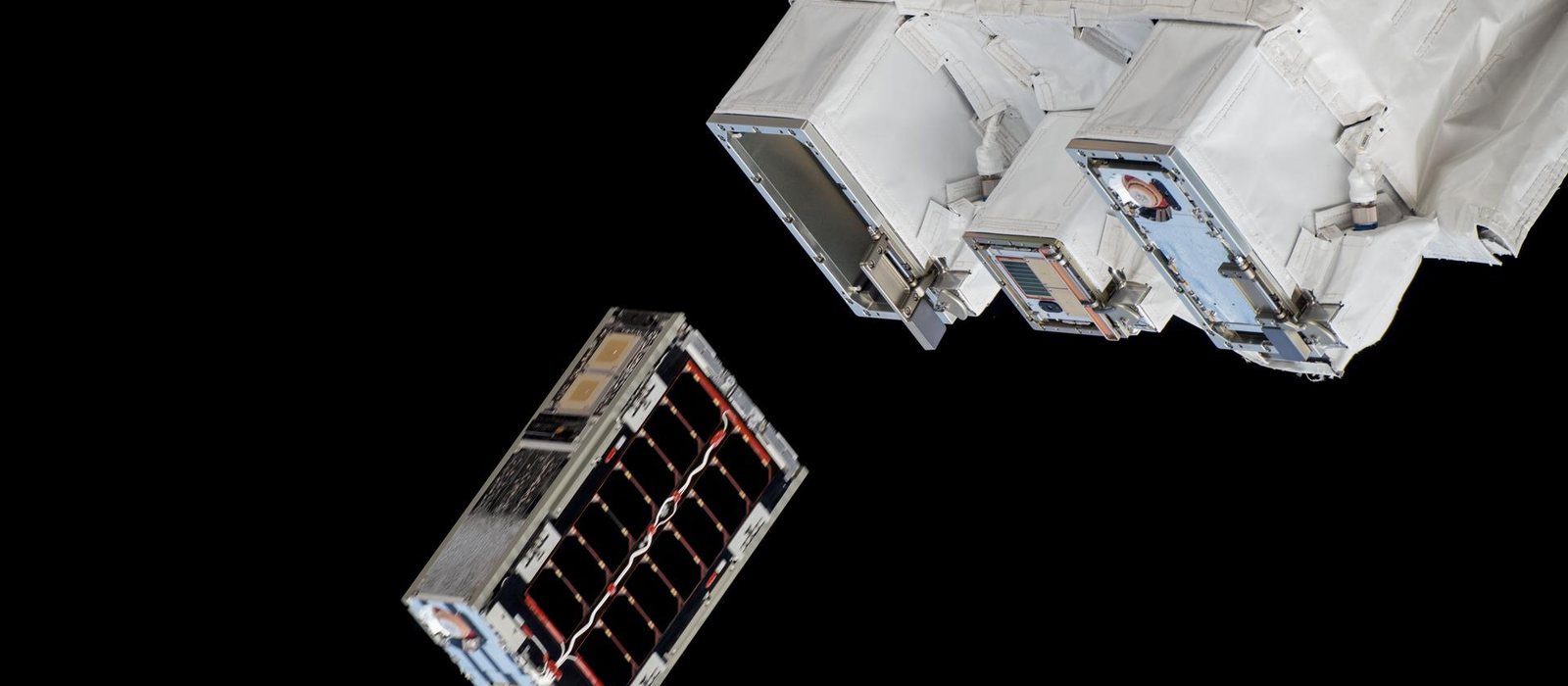
Photo: NASA
The spacecraft
- Mass, propulsion and how many of them
- Payload, and for Earth observation its ground resolution
- Lifetime in orbit and the way it ends

Photo: NASA
The operator
- Where you are established and where control sits
- Your role: operator, payload owner, launch provider
- The answers you give on terms the law leaves undefined
Photo: Mixkit
Launch and ground
- Launch state, date and whether you share the ride
- The countries of your ground segment
- Each country touched is named with the fact that touches it
Built to be checked
The same mission and the same rules give the same answer.
Computed, not generated.
The computation runs without a language model. Rules compiled from the official text are held against the facts of your mission.
The source at each obligation.
Every obligation names the provision it comes from and links to the official text, in the edition it was read in.
What is not covered is listed.
Fixed today: one act each from Austria and Germany. Further countries are read in or in review. The coverage register shows which.
From a mission design we compute which obligations apply in the covered countries, with the official source at each obligation. What is not covered is in the coverage register. Whether something is authorised is decided by the authority. The software is not legal advice. The windows on this page play demo data: the operator is invented, the act and its provisions are real.